Skip to content

Bits of .NET

Daily micro-tips for C#, SQL, performance, and scalable backend engineering.

  • Asp.Net Core
  • C#
  • SQL
  • JavaScript
  • CSS
  • About
  • ErcanOPAK.com
Wordpress

How to Disable Gutenberg & Return to the Classic WordPress Editor

- 16.01.19 | 22.11.19 - ErcanOPAK

Image result for Classic Editor wordpress

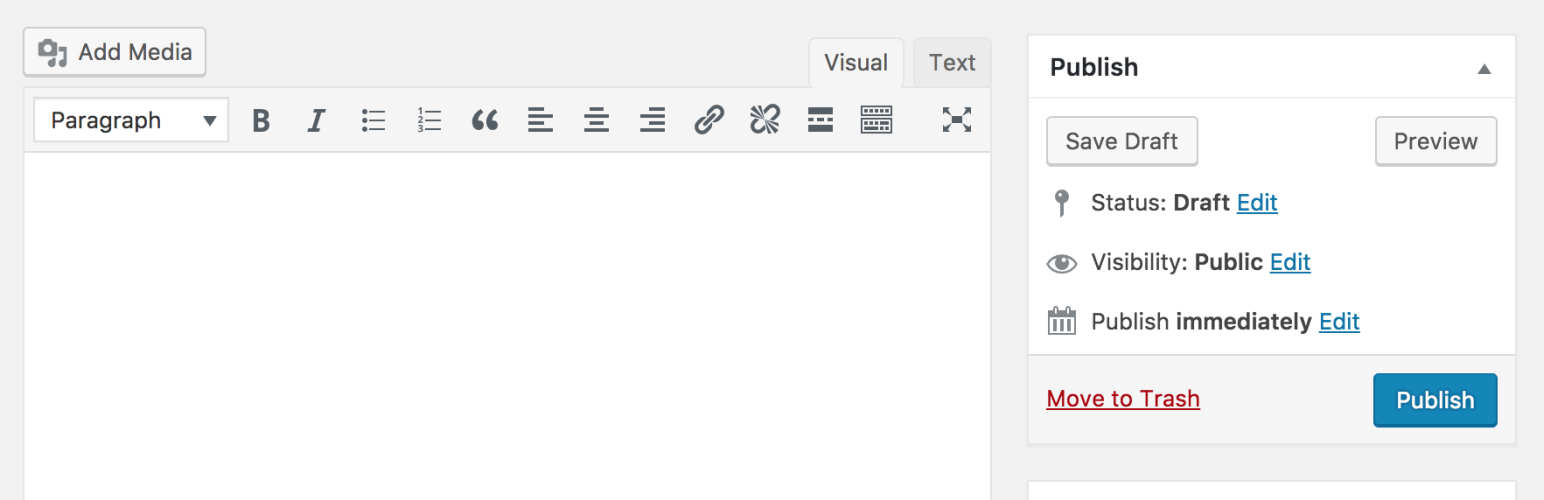
Classic Editor is an official plugin maintained by the WordPress team that restores the previous (“classic”) WordPress editor and the “Edit Post” screen. It makes it possible to use plugins that extend that screen, add old-style meta boxes, or otherwise depend on the previous editor.

Classic Editor is an official WordPress plugin, and will be fully supported and maintained until at least 2022, or as long as is necessary.

At a glance, this plugin adds the following:

  • Administrators can select the default editor for all users.
  • Administrators can allow users to change their default editor.
  • When allowed, the users can choose which editor to use for each post.
  • Each post opens in the last editor used regardless of who edited it last. This is important for maintaining a consistent experience when editing content.

In addition, the Classic Editor plugin includes several filters that let other plugins control the settings, and the editor choice per post and per post type.

By default, this plugin hides all functionality available in the new Block Editor (“Gutenberg”).

Screenshots
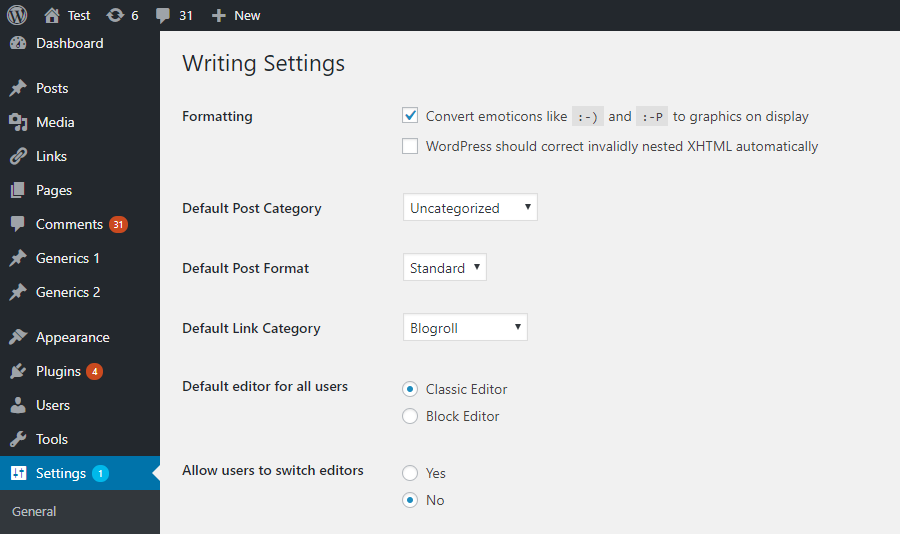
Admin settings on the Settings -> Writing screen.
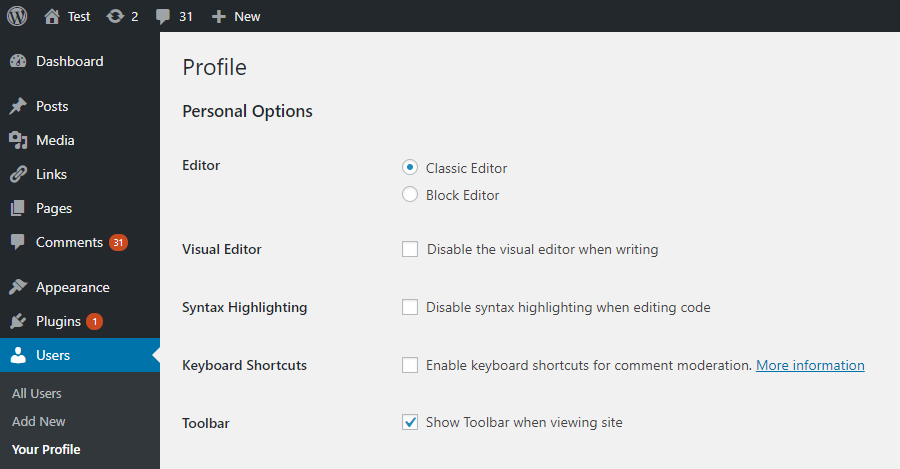
User settings on the Profile screen. Visible when the users are allowed to switch editors.
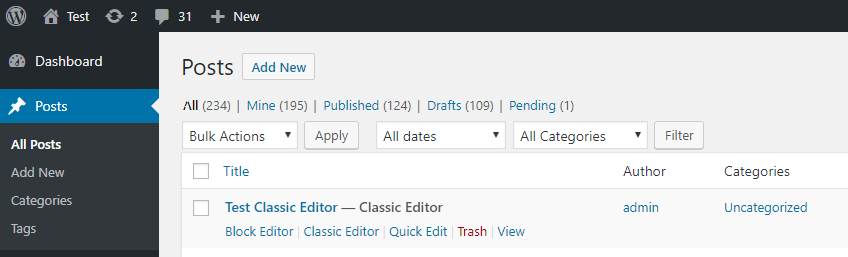
“Action links” to choose alternative editor. Visible when the users are allowed to switch editors.
Link to switch to the Block Editor while editing a post in the Classic Editor. Visible when the users are allowed to switch editors.
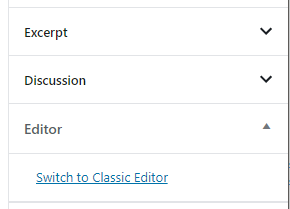
Link to switch to the Classic Editor while editing a post in the Block Editor. Visible when the users are allowed to switch editors.
Network setting to allow site admins to change the default options.

User settings on the Profile screen. Visible when the users are allowed to switch editors.

"Action links" to choose alternative editor. Visible when the users are allowed to switch editors.

Link to switch to the Block Editor while editing a post in the Classic Editor. Visible when the users are allowed to switch editors.

Link to switch to the Classic Editor while editing a post in the Block Editor. Visible when the users are allowed to switch editors.

Network setting to allow site admins to change the default options.

Related posts:

WordPress “Images Not Updating” — The Persistent Cache Trap

WordPress Slow First Load — Autoloaded Options Table

How to solve WordPress "Briefly unavailable for scheduled maintenance." problem

Post Views: 115

Post navigation

Function with variable number of arguments in C#
How to send e-mail in HTML View with wp_mail()

Leave a Reply Cancel reply

Your email address will not be published. Required fields are marked *

December 2025
M T W T F S S
1234567
891011121314
15161718192021
22232425262728
293031  
« Nov    

Most Viewed Posts

  • Get the User Name and Domain Name from an Email Address in SQL (916)
  • Get the First and Last Word from a String or Sentence in SQL (798)
  • How to select distinct rows in a datatable in C# (773)
  • How to add default value for Entity Framework migrations for DateTime and Bool (773)
  • How to make theater mode the default for Youtube (602)
  • Add Constraint to SQL Table to ensure email contains @ (558)
  • How to enable, disable and check if Service Broker is enabled on a database in SQL Server (535)
  • Average of all values in a column that are not zero in SQL (505)
  • Find numbers with more than two decimal places in SQL (421)
  • How to use Map Mode for Vertical Scroll Mode in Visual Studio (416)

Recent Posts

  • Visual Studio “F5 Takes Forever” — IIS Express Cache
  • WordPress Slow First Load — Autoloaded Options Table
  • Windows 11 Laptop Overheats — Turbo Boost Gone Wrong
  • Windows 11 Slow Context Menu — The Explorer Extension Trap
  • AJAX “Works Once, Then Fails” — Cached POST Response
  • JS Memory Leaks — Forgotten Event Listeners
  • HTML5 button Defaults to submit (Surprise!)
  • CSS opacity Breaks Child Elements — Use RGBA Instead
  • ASP.NET Core Health Checks That Actually Matter
  • ASP.NET Core “Slow Startup” — Reflection Scanning Trap

Most Viewed Posts

  • Get the User Name and Domain Name from an Email Address in SQL (916)
  • Get the First and Last Word from a String or Sentence in SQL (798)
  • How to select distinct rows in a datatable in C# (773)
  • How to add default value for Entity Framework migrations for DateTime and Bool (773)
  • How to make theater mode the default for Youtube (602)

Recent Posts

  • Visual Studio “F5 Takes Forever” — IIS Express Cache
  • WordPress Slow First Load — Autoloaded Options Table
  • Windows 11 Laptop Overheats — Turbo Boost Gone Wrong
  • Windows 11 Slow Context Menu — The Explorer Extension Trap
  • AJAX “Works Once, Then Fails” — Cached POST Response

Social

  • ErcanOPAK.com
  • GoodReads
  • LetterBoxD
  • Linkedin
  • The Blog
  • Twitter
© 2025 Bits of .NET | Built with Xblog Plus free WordPress theme by wpthemespace.com